In Bowling Green, karst topography and extensive limestone cave systems create subterranean voids that drive mice and rats into residential foundations during temperature drops. Crawlspace vents, weep holes, and HVAC…
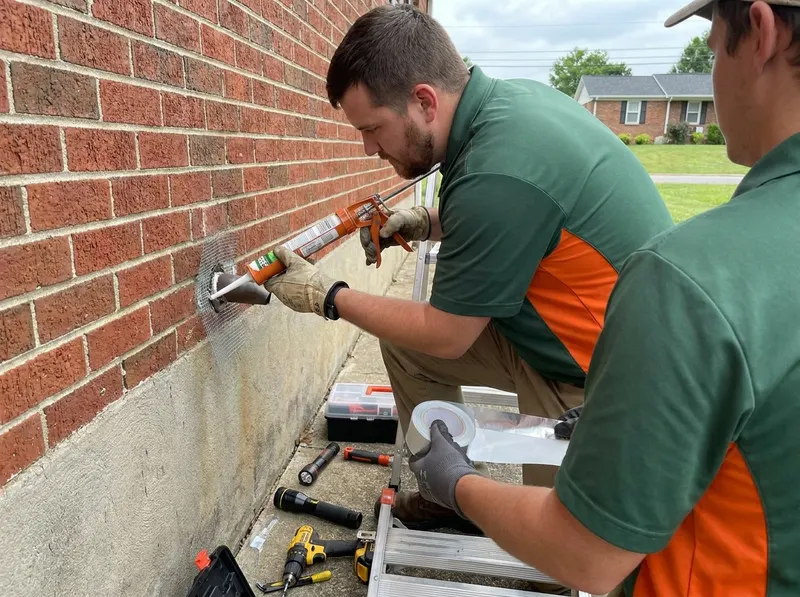
In Bowling Green, karst topography and extensive limestone cave systems create subterranean voids that drive mice and rats into residential foundations during temperature drops. Crawlspace vents, weep holes, and HVAC line penetrations in neighborhoods like Briarwood, Indian Hills, and Fieldstone Farms provide direct access for rodents seeking warmth. Standard retail bait stations fail because they leave rodents to perish inside insulated wall cavities, producing severe odor and biohazard conditions. Effective exclusion resolves the root vulnerability by securing building perimeters with galvanized hardware cloth, copper wire mesh, and metal flashing rather than relying on broadcast poison baits indoors.
Older architectural styles near Downtown Bowling Green and Old Towne feature historic stone or unsealed brick basements where mortar decay allows roof rats and house mice entry points as small as 6 millimeters. In slab-on-grade developments across Covington Grove, Hartland, and Crossridge, builder gaps behind vinyl siding corner posts and unsealed garage door astragals serve as primary ingress vectors. Technicians locate rub marks, gnawed subflooring, and localized droppings, then install rigid, rodent-proof barriers over foundation louvers and utility access plates. Trapping protocols follow an integrated pest management sequence, using clean mechanical traps checked on designated schedules to clear active animals without releasing airborne toxic fumes around children or domestic pets.
The trade-off between exterior baiting programs and comprehensive mechanical exclusion centers on structural permanence versus recurring maintenance costs. Exterior chemical bait boxes reduce nearby field rodent density, but failing to physically seal exterior gaps ensures autumn reinvasions when ambient temperatures drop below 45 degrees Fahrenheit. A complete structural abatement requires 1 to 3 visits: sealing every exterior void, running interior snap-trap lines for 5 to 10 days until zero activity is detected, and applying an enzyme deodorizer to neutralize rodent pheromone trails that attract future colonies. The minimum service charge for local remediation is $200, covering diagnostic inspections and basic seal-ups, with final costs determined by total linear footage of exclusion work.
Every job gets a firm, written price after a free on-site visit.
Tell us about your rodent exclusion and abatement job in Bowling Green and we'll send a clear, written quote, usually the same day.
 Zorvilo Pest Control