Pest control services Bowling Green homeowners rely on focus on eliminating active infestations while creating long-term structural barriers against native Warren County pests. Immediate intervention halts insect reproduction cycles inside wall cavities, damp crawl spaces, and attic insulation before structural damage or sanitation hazards spread across living areas.
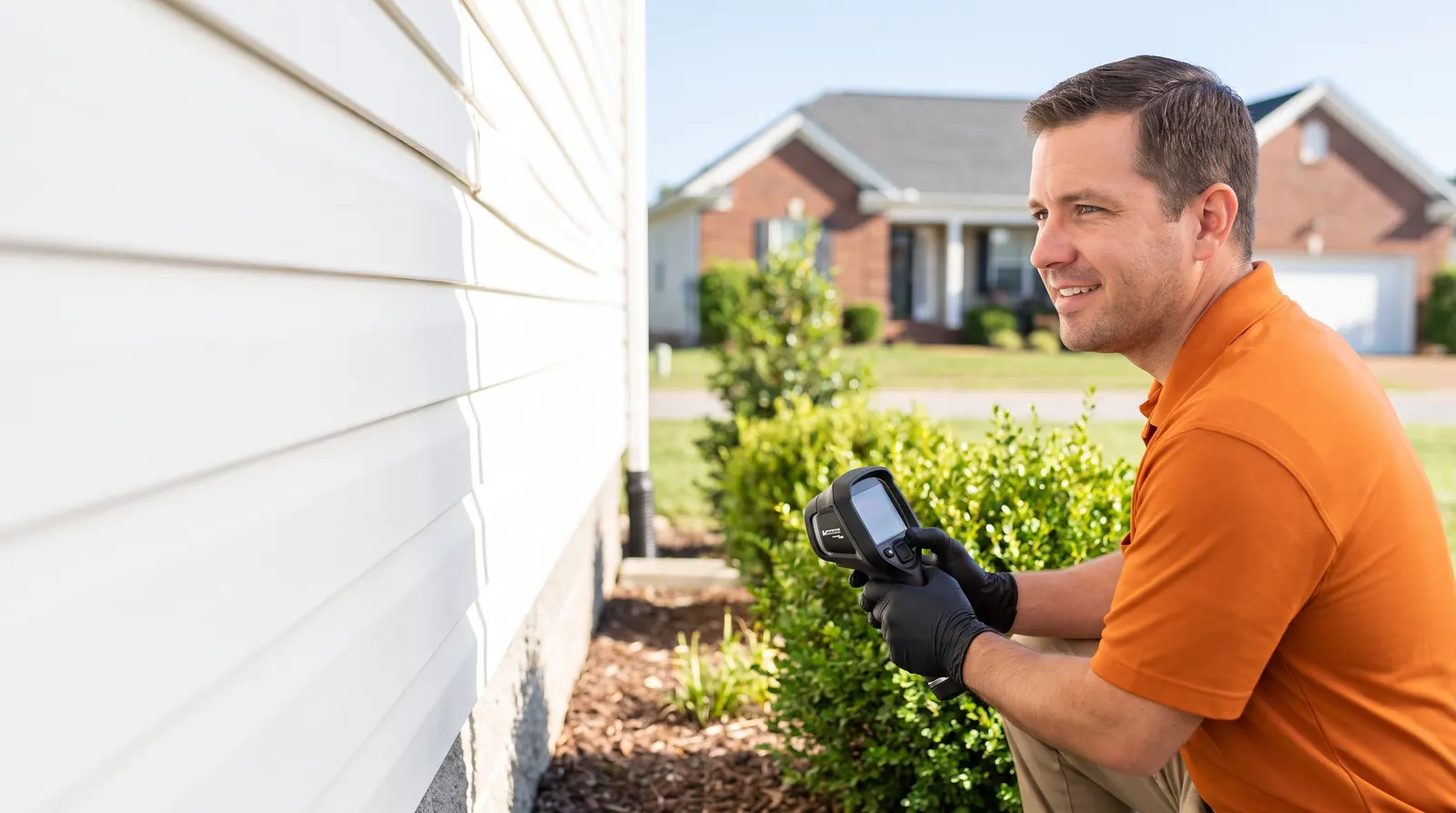
A professional pest control services company in Bowling Green is an integrated pest management contractor that inspects, identifies, and eradicates insect and rodent colonies inside residential structures using targeted biological barriers and mechanical exclusion.
Every service reflects the same meticulous attention to detail, whether it's a single job or a larger pest control services project across Bowling Green.
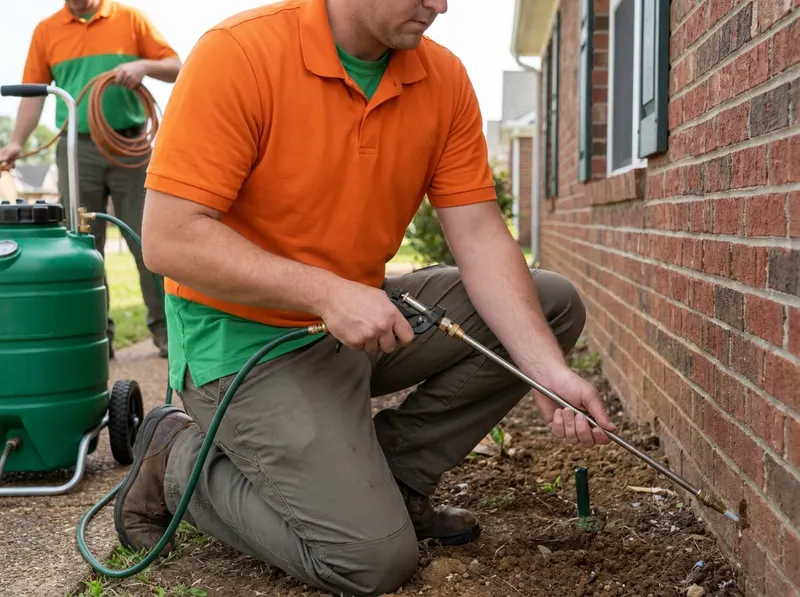
Subterranean termite management requires deep liquid soil trenching along exterior foundation footings and targeted sub-slab injection beneath adjoining concrete slabs. Technicians dig 6-inch by 6-inch trenches directly adjacent to foundation walls, applying non-repellent liquid termiticides at a standard volume of 4 gallons per 10 linear feet. When worker termites traverse this treated soil zone, they absorb the active ingredient without detection and mechanically transfer the compound to the reproductive queen through social grooming and trophallaxis. Inside crawl spaces, technicians inspect sill plates, band joists, and masonry support piers for structural mud shelter tubes, injecting localized termiticide into expansion gaps around incoming plumbing sleeves. Long-term colony defense incorporates subterranean baiting stations installed flush with the turf line at 10-foot to 15-foot intervals around the perimeter, which intercept foraging colonies migrating upward from limestone fissure systems before they breach load-bearing timber.
Get a quote →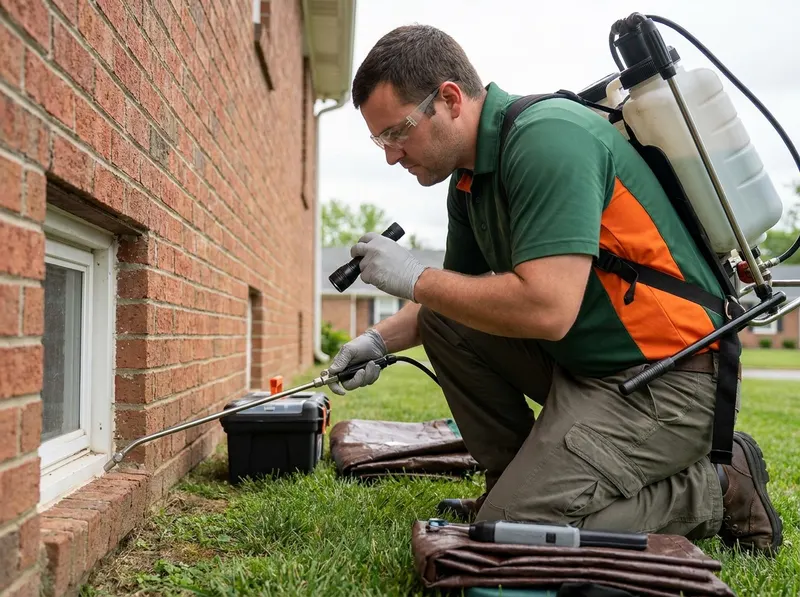
Eradicating brown recluse spiders (Loxosceles reclusa) demands a systematic structural approach targeting hidden harborages rather than open air volumes. Because brown recluse spiders possess long legs that keep their bodies elevated off treated flooring, standard liquid broadcast sprays fail to deliver a lethal dose and merely displace the arachnids into finished bedrooms. Technicians execute precision crack-and-crevice applications using microencapsulated wettable powders along structural sill plates, floor joists, behind baseboard perimeters, and within unfinished basement framing. Unfinished attic spaces and hollow interior wall partitions receive electrostatically charged amorphous silica dust formulations injected through switch plates and access hatches; this inorganic compound abrades the spider's waxy epicuticle layer, inducing rapid desiccation without emitting synthetic chemical odors. Monitored glue boards placed flat along dark closet perimeters and furniture legs track population density shifts, capturing wandering hunting males during their summer mating cycles.
Get a quote →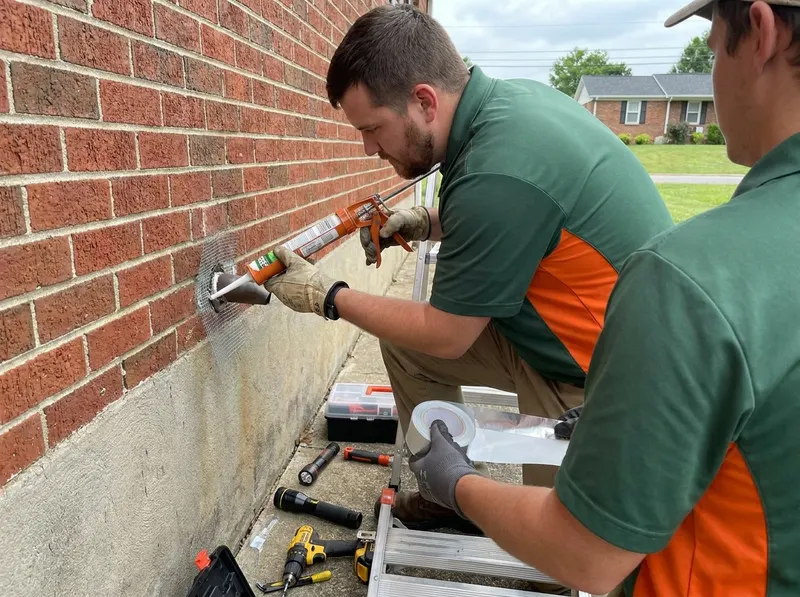
Complete rodent remediation stops the entry of house mice (Mus musculus) and Norway rats (Rattus norvegicus) into residential envelopes. Initial inspections map structural vulnerability points along roof drip lines, crawl space access doors, masonry weep holes, and utility pipe penetrations. Technicians mechanically seal every gap measuring 0.25 inches or larger using rust-proof stainless steel mesh, copper wool, heavy-gauge 0.25-inch galvanized hardware cloth, and metal-reinforced expanding foam sealants that withstand gnawing teeth. Inside living spaces, unfinished basements, and attic insulation beds, technicians place covered, mechanical snap traps along verified travel runways to extract indoor populations swiftly without utilizing indoor poison baits that cause odor issues inside wall cavities. Exterior perimeters receive lockable, tamper-resistant bait stations anchored to concrete surfaces along exterior walls, loaded with second-generation anticoagulant paraffin blocks that prevent outside rodents from re-establishing nests near foundation footings.
Get a quote →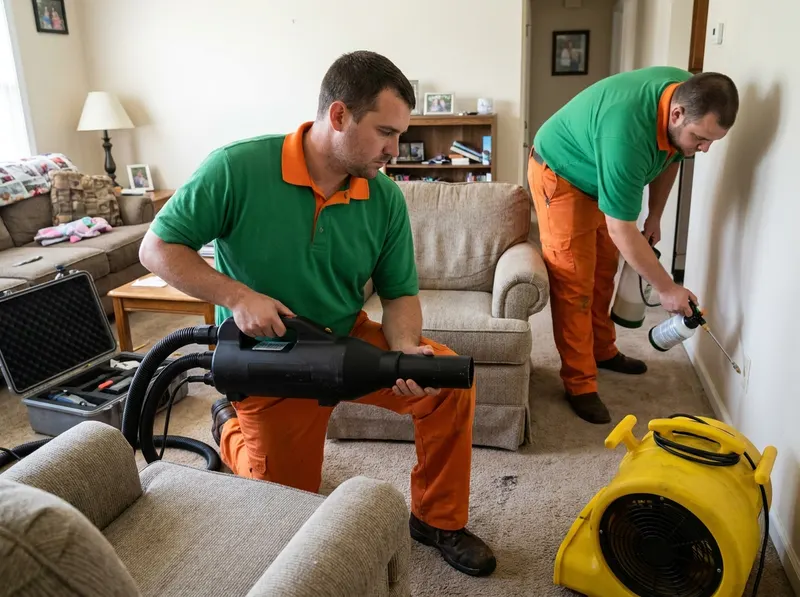
Bed bug eradication eliminates infestations of Cimex lectularius across all development phases, including microscopic eggs, five nymphal stages, and reproductive adults. Technicians conduct visual and illuminated inspections of mattress piping, box spring internal frames, upholstered furniture joints, picture frame backings, and electrical junction boxes. Corrective chemical protocols utilize dual-action formulations combining fast-acting synthetic pyrethroids or pyrroles with juvenile insect growth regulators that halt chitin synthesis, preventing immature nymphs from maturing into reproductive adults. Technicians inject long-residual dry desiccant dusts directly into hollow bed frames, baseboard crevices, and wall voids around sleeping quarters, providing continuous lethal protection that remains active for months. High-temperature steam applications exceeding 180 degrees Fahrenheit are directed along tufts, seams, and carpet perimeter tack strips, delivering immediate thermal destruction to heat-sensitive eggs without saturating household furnishings in chemical residue.
Get a quote →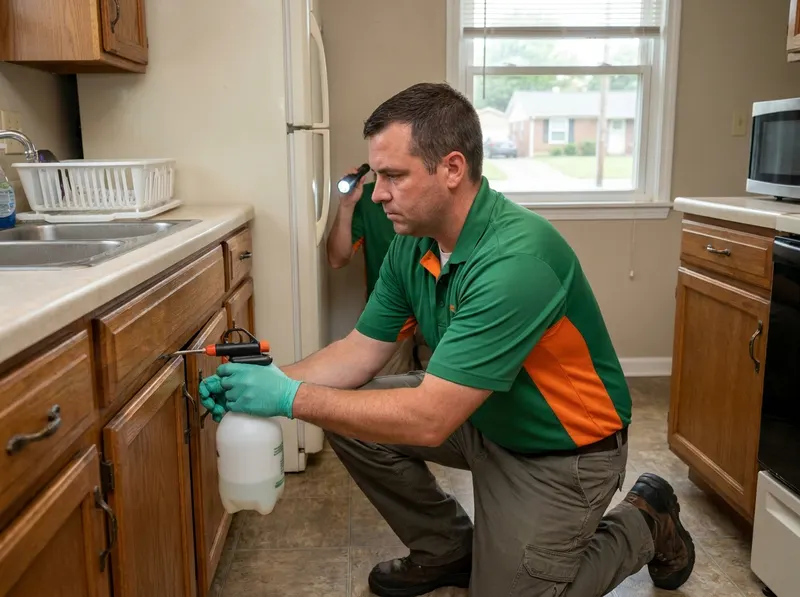
Cockroach eradication focuses on eliminating German cockroaches (Blattella germanica) and larger peri-domestic American cockroaches inhabiting humid residential zones. Treatments isolate primary harborages inside kitchen cabinet hinges, behind dishwasher motor assemblies, beneath refrigerator drip pans, and around bathroom plumbing penetrations. Technicians apply professional-grade gel baits formulated with active ingredients such as indoxacarb or fipronil in micro-dots across secluded cabinet framing; feeding nymphs and adults ingest the bait and spread the lethal compound throughout the aggregation cluster through necrophagy and coprophagy. Void areas receive targeted applications of aerosolized insect growth regulators that disrupt metamorphosis, producing sterile adult females with twisted wings that cannot reproduce. For American cockroaches harboring in damp basements or crawl spaces, granular non-repellent baits and microencapsulated exterior foundation barriers intercept foraging insects migrating upward through sewer line vents or structural foundation vents.
Get a quote →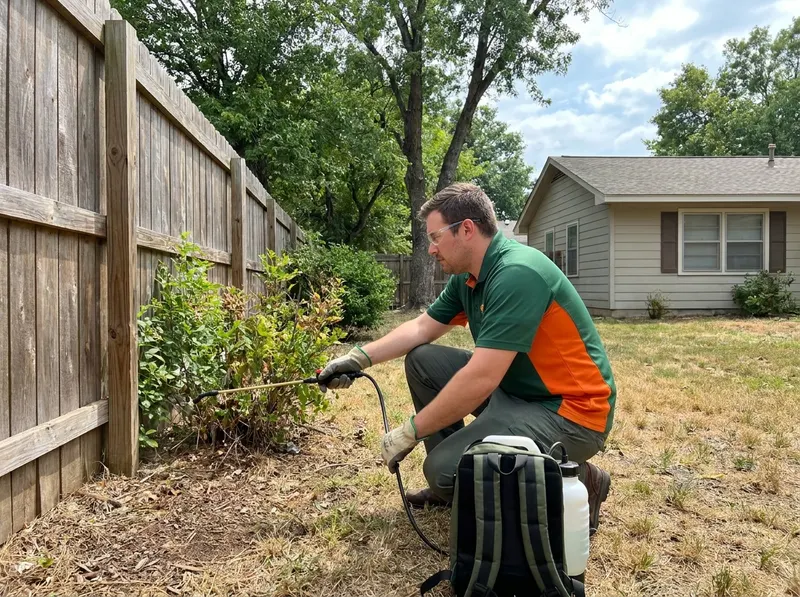
Exterior mosquito abatement interrupts the life cycle of Asian tiger mosquitoes (Aedes albopictus) and common house mosquitoes across residential landscapes. Technicians use gas-powered mist blowers to apply microencapsulated adulticides and insect growth regulators to the undersides of broadleaf foliage, dense groundcovers, shaded ornamental shrubs, and sheltered deck substructures where adult mosquitoes rest during daylight hours. The polymer microcapsules adhere to plant leaf surfaces, resisting rain wash-off and UV degradation to maintain effective knockdown control for 21 to 30 days per application. In conjunction with foliage treatments, technicians treat stagnant standing water sources, including ornamental fountains, landscape catch basins, corrugated gutter downspout extensions, and low-lying swales, using biological larvicide briquettes containing Bacillus thuringiensis israelensis (BTI). These natural bacterial proteins specifically target aquatic mosquito larvae without posing harm to domestic pets, birds, or beneficial garden pollinators.
Get a quote →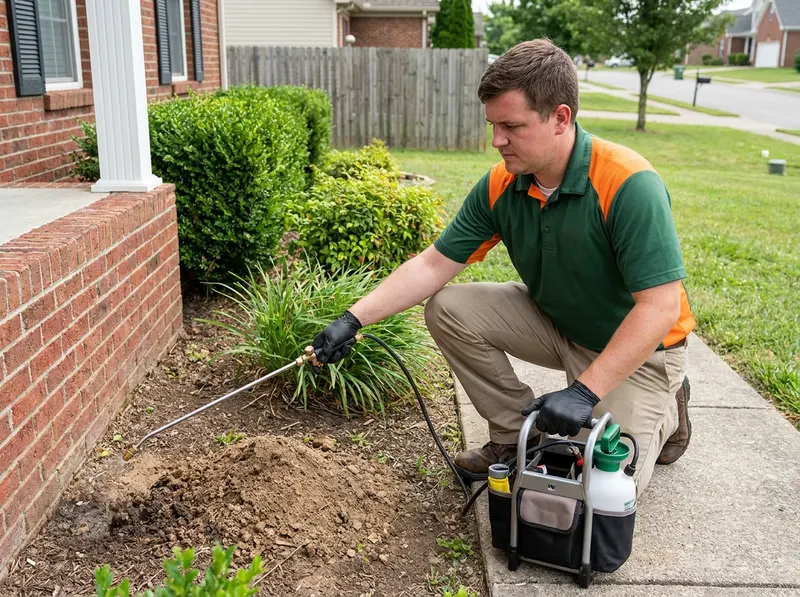
Ant management strategies resolve destructive structural nesting by black carpenter ants (Camponotus pennsylvanicus) and nuisance foraging by odorous house ants inside food preparation zones. Carpenter ants do not consume wood but excavate smooth structural galleries inside moisture-compromised wall studs, window headers, and roof valley framing; technicians locate these hidden satellite galleries using acoustic diagnostic methods and treat the framing voids directly using specialized non-repellent insecticidal foam that expands to coat the nest interior. For trailing sugar ants invading kitchen counters, technicians deploy sweet and protein-based liquid attractant baits containing slow-acting metabolic inhibitors; foraging worker ants feed on the liquid bait and transport it internally back to deep underground queens, completely neutralizing the reproductive colony core within 7 to 14 days without triggering colony budding.
Get a quote →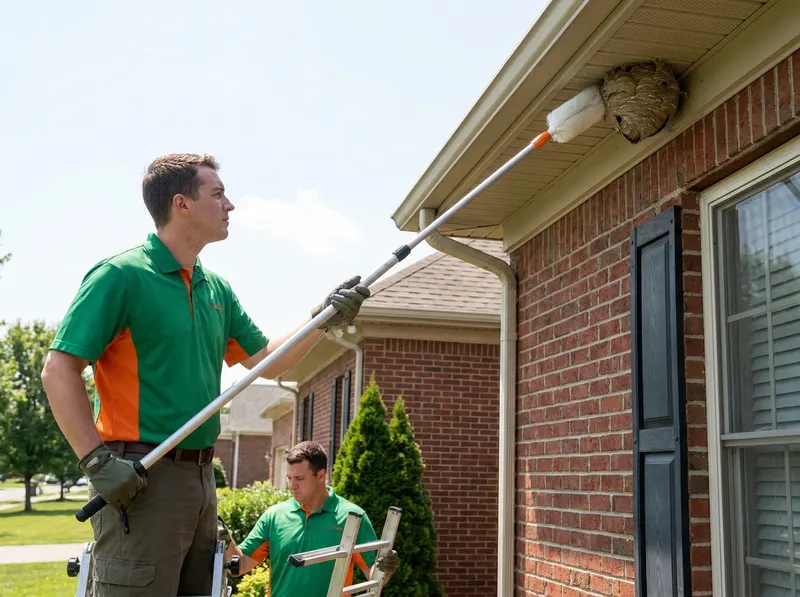
Stinging insect remediation addresses the aggressive nesting behavior of paper wasps, bald-faced hornets, and ground-nesting yellow jackets. Technicians equipped with protective sting-resistant suites execute targeted direct knockdown treatments on elevated aerial nests anchored to exterior soffits, window dormers, and chimney trims. Using specialized long-range application rods, technicians deliver fast-acting freeze sprays and residual contact formulations that neutralize active guards instantly, preventing defensive swarm behavior. Ground yellow jacket burrows located in lawn turf, rock retaining walls, or landscape railroad ties receive deep soil void injections followed by physical excavation or mechanical plugging to ensure returning foragers cannot repopulate the subterranean tunnel system. Exterior architectural perimeters receive residual wettable powder treatments to repel incoming queens from constructing new umbrella nests during early spring nesting periods.
Get a quote →You get a firm, itemized quote for your pest control services before any work begins, no surprises, no pressure.
Careful prep, tidy work, and a full cleanup when we are done. We treat your home and belongings like our own.
The same trusted, background-checked team from the first call to the final check.
Selecting appropriate treatment protocols depends on the pest biology, colonization stage, and construction style of the home. If property owners observe dry mud tubes along foundation stem walls or hollowed baseboard timbers, choose targeted subterranean termite perimeter liquid trenching and bait monitoring rather than generic surface repellent spraying; repellent surface chemicals cause subterranean termites to bypass treated zones and find alternate entry points through internal slab cracks. If brown recluse spiders appear across upper ceilings or inside closets, select an intensive void dusting and crack-and-crevice application over broad fogging treatments; aerosolized foggers disperse spiders deeper into structural voids, increasing human bite risks.
If scratching noises or droppings occur inside attic spaces between October and February, select complete mechanical multi-point exclusion combined with tamper-resistant baiting stations rather than isolated snap traps; unsealed exterior gaps invite replacement populations of field mice within days. If German cockroaches infest kitchen cabinet framework, choose precision non-repellent gel baits combined with juvenile insect growth regulators over contact knockdown sprays; knockdown sprays scatter breeding females across adjoining living areas, multiplying satellite clusters behind drywall. If bed bugs appear along mattress welting or electrical wall faceplates, select whole-room chemical desiccant injection and systemic perimeter residual protocols over retail liquid aerosols; retail aerosols lack ovicidal persistence and drive adult bed bugs into adjacent baseboards.
The trade-off between exterior-only maintenance barriers and full interior-exterior corrective treatments involves balancing entry-point disruption with interior footprint disruption: exterior-only visits maintain a 60-to-90-day protective perimeter with zero indoor preparation, whereas active internal colonies require mechanical access to closets, under-sink piping, and utility chases to dismantle the nesting source directly.
Every project gets a firm, written price after a free on-site visit. Ranges below for orientation.
Tell us about your pest control services job and we'll send a clear, written quote, usually the same day. Or just call and talk to a real Bowling Green pro.
(270) 721-5916
Bowling Green's underlying karst limestone terrain, prominent near Lost River Cave, Basil Griffin Park, and Fountain Square Park, forms an expansive network of subterranean fissures, sinkholes, underground streams, and elevated soil moisture. This distinct Warren County geological foundation drives substantial subterranean termite activity along building stem walls and encourages brown recluse spider populations to seek dry shelter within local crawl spaces and attics. During humid Warren County summers, clay-rich soil expands and contracts, opening structural hairline cracks in residential concrete foundations that provide direct access for insects across established neighborhoods from Indian Hills and Briarwood to Hartland and Fieldstone Farms. The proximity of the Barren River drainage basin creates elevated humidity conditions that sustain dense mosquito breeding pockets and accelerate timber rot, drawing wood-destroying carpenter ants and subterranean termites into structural sill plates. Older architectural framing across historic Old Towne and Downtown Bowling Green features seasoned hardwood lumber that has developed internal settling gaps, while suburban residential crawl spaces around Covington Grove and Crossridge experience damp microclimates that foster large populations of silverfish, camel crickets, and overwintering field mice moving inward during late-autumn harvest cycles.
Free estimates for Bowling Green & the surrounding area.
 Zorvilo Pest Control