Brown recluse (Loxosceles reclusa) infestations in Warren County stem directly from South Central Kentucky's limestone karst terrain and high relative humidity, which allow arachnids to shelter inside structural…
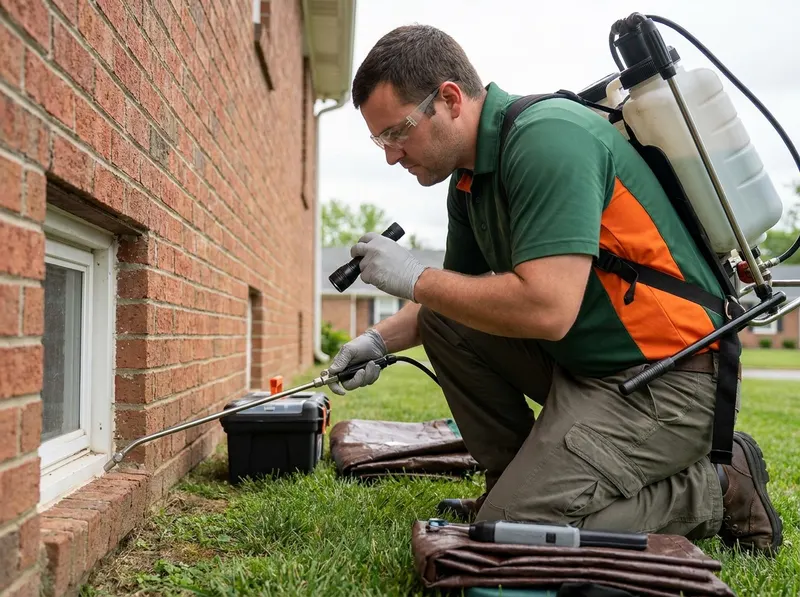
Brown recluse (Loxosceles reclusa) infestations in Warren County stem directly from South Central Kentucky's limestone karst terrain and high relative humidity, which allow arachnids to shelter inside structural cracks, subterranean fissures, and unsealed subfloors. Unlike common web-spinning spiders that ingest surface sprays during routine grooming, brown recluses are active nocturnal hunters with long legs that keep their bodies elevated above treated floor surfaces. Over-the-counter pyrethroid bug bombs and broad liquid baseboard sprays fail against this biology; commercial aerosol foggers irritate recluse populations, scattering them from unfinished framing into finished bedrooms, closets, and children's play areas. Successful remediation requires deep-void placement of inorganic desiccant dusts, such as amorphous silica gel, directly into attic insulation, floor joists, behind electrical faceplates, and along sill plates where recluses shelter during daylight hours.
Residential homes in established neighborhoods like Fairview, Briarwood, and Old Towne frequently feature settled fieldstone foundations, tongue-and-groove subflooring, and dense attic storage boxes that house multi-generation populations numbering dozens or hundreds of spiders. Conversely, newer properties in Covington Grove, Fieldstone Farms, and Hartland typically experience arachnid ingress through weeping vents, gaps around utility penetrations, and subterranean foundation settlement cracks common near subterranean drainage networks like Lost River Cave. Treatment strategy shifts based on architecture: crawlspace-foundational homes in Indian Hills require full vapor barrier dusting, sub-band sill barrier treatments, and structural dehumidification assessments, whereas slab-built developments in Crossridge rely on exterior envelope sealing and weep-hole baffle installations to block arachnid hunting corridors.
Selecting structural void remediation over simple perimeter liquid applications involves clear logistical considerations. Liquid-only applications offer immediate reduction of general outdoor pests like crickets and ground beetles, the recluse's primary food source, yet leave deep structural attic populations undisturbed. Comprehensive void remediation requires structural access, temporary clearing of perimeter closets, and targeted attic dusting, resulting in a 90-day systemic clean-out rather than an incomplete cosmetic knockdown. A baseline initial treatment starts at the mandatory service minimum of $200 for single-zone intervention, with full residential decontamination scaling to $850 based on finished square footage, attic accessibility, and crawlspace moisture conditions.
Every job gets a firm, written price after a free on-site visit.
Tell us about your brown recluse and spider control job in Bowling Green and we'll send a clear, written quote, usually the same day.
 Zorvilo Pest Control