Bed bug thermal and chemical remediation in Bowling Green targets Cimex lectularius infestations across older Downtown multi-family units, single-family homes in Hartland and Briarwood, and rental corridors near…
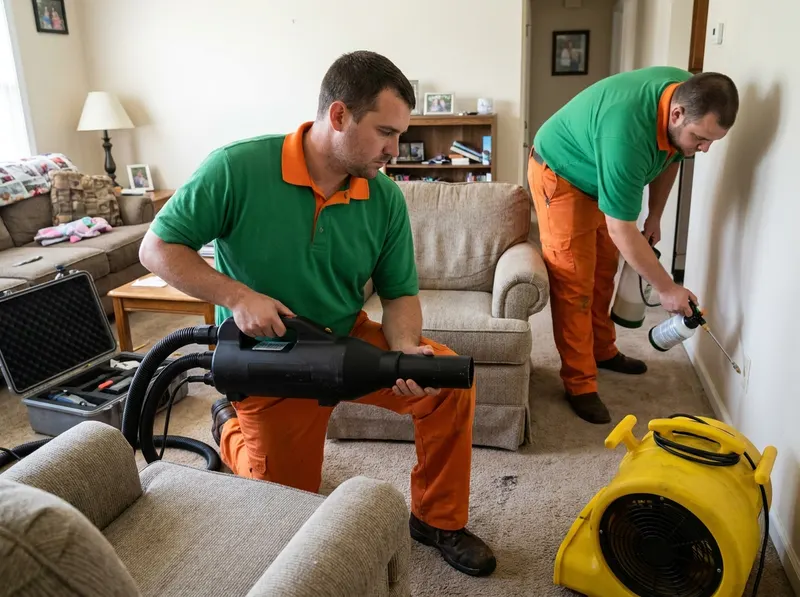
Bed bug thermal and chemical remediation in Bowling Green targets Cimex lectularius infestations across older Downtown multi-family units, single-family homes in Hartland and Briarwood, and rental corridors near Western Kentucky University. Thermal remediation elevates ambient interior temperatures between 120°F and 135°F using industrial convective electric or indirect fired heaters. Sustained exposure at 122°F achieves 100% mortality across all life stages, including desiccation-resistant eggs, within 90 minutes. Unlike standard chemical applications that require bugs to cross treated boundaries over weeks, convective heat penetrates structural framing, upholstered headboards, deep mattress seams, and baseboard junctions where chemical aerosols fail to reach. Chemical applications serve as a perimeter companion rather than a standalone fix, utilizing non-repellent liquid formulations and microencapsulated insect growth regulators applied strictly to void spaces, electrical junction perimeters, and subfloor tack strips to prevent re-introduction from surviving eggs or external luggage transfer.
Selecting the correct protocol relies on structural contents and building design. Whole-structure thermal remediation suits heavy multi-room infestations in Fieldstone Farms or Covington Grove where active nesting spans multiple furniture items, eliminating the necessity to discard valuable beds or dressers. The trade-off involves preparatory steps: residents must temporarily remove heat-sensitive items including wax candles, pressurized aerosol cans, medications, and sensitive vinyl blinds. For localized single-room discoveries in Indian Hills or Crossridge, targeted chemical remediation coupled with localized high-output steam units avoids whole-home thermal preparation, though it demands a 14-to-21-day incubation window to catch newly hatched nymphs during follow-up cycles. Off-the-shelf pyrethroid foggers from hardware stores consistently fail because modern bed bug populations exhibit high physiological resistance to synthetic pyrethroids, driving the insects deeper into interior drywall cavities rather than eliminating the nesting colony.
Execution follows a disciplined four-stage sequence across all Warren County homes: 1. A physical verification confirms pest presence by locating live specimens, cast skins, or fecal spotting along mattress seams and baseboards. 2. Technicians install high-capacity convective heaters and monitored thermistor sensors, steadily driving air temperatures to lethal thresholds while high-velocity air movers eliminate cold pockets under subfloors and inside closets. 3. Monitored thermal holds remain active for a minimum of 4 hours, logging real-time thermal readings in excess of 122°F across wall cavities. 4. Post-heat cooling allows technicians to inject targeted residual desiccant dusts and insect growth regulators inside electrical switch plates and room perimeters, ensuring permanent barrier defense without residual airborne chemical exposure for family members or pets.
Every job gets a firm, written price after a free on-site visit.
Tell us about your bed bug thermal and chemical remediation job in Bowling Green and we'll send a clear, written quote, usually the same day.
 Zorvilo Pest Control