Cockroach infestations in Warren County stem primarily from two distinct biological vectors requiring contrasting eradication mechanics. Interior residential infestations throughout Briarwood and Indian Hills…
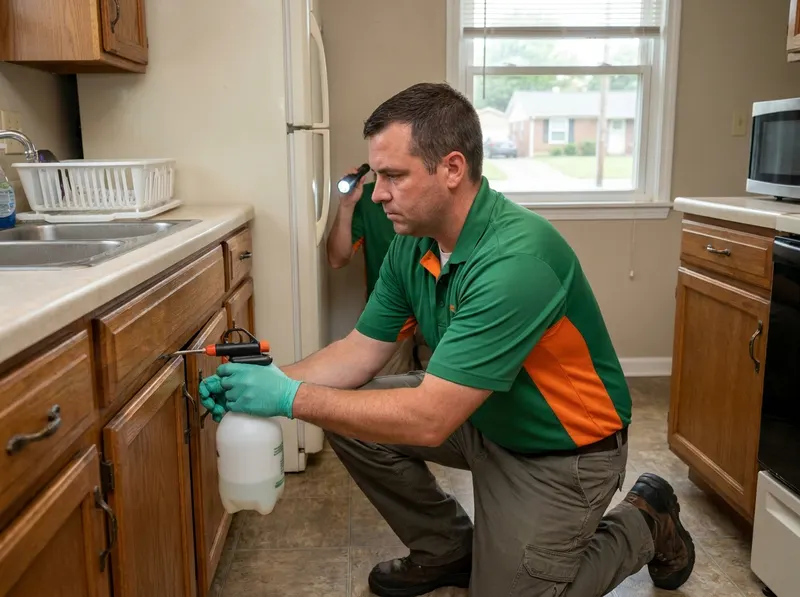
Cockroach infestations in Warren County stem primarily from two distinct biological vectors requiring contrasting eradication mechanics. Interior residential infestations throughout Briarwood and Indian Hills frequently involve German cockroaches (*Blattella germanica*), which cluster in localized warmth and moisture zones near motor housing compressors, under kitchen sink cabinets, and inside wall cavities. A female German cockroach carries an ootheca containing 30 to 48 eggs, which hatch in roughly 28 days. Retail aerosol foggers compound the issue by applying synthetic pyrethroids that scatter the aggregate colony deeper behind drywall, triggering population dispersals across multiple rooms. Professional eradication deploys non-repellent formulations containing hydramethylnon or indoxacarb gel matrices paired with insect growth regulators like hydroprene, halting biological development and preventing juvenile nymphs from reaching reproductive maturity.
Conversely, American and Oriental roaches dominate low-elevation, limestone-adjacent subterranean structures across Downtown Bowling Green, Fairview, and properties bordering the Lost River Cave drainage basin. The regional karst geography creates expansive, humid underground voids where *Periplaneta americana* thrives, using municipal storm conduits, plumbing penetrations, and damp foundation footers to enter basements and living quarters during hot Kentucky summers. Structural clean-outs in neighborhoods like Hartland and Fieldstone Farms combine structural perimeter micro-encapsulations, delta dust injections into dry pipe voids, and crawl space moisture barriers. The operational trade-off centers on application speed versus disruption: targeted gel baiting and dry particulate dusts require precise placement along micro-fractures, yet completely avoid airborne chemical mists, allowing occupants, children, and pets to remain safely inside without mandatory multi-hour home evacuations.
Achieving complete colony elimination involves three chronological phases across a 30-day biological life cycle. Step 1: The technician conducts an unhurried, mechanical flashlight audit of all structural moisture and heat nodes, deploying sticky monitor boards to map active travel routes. Step 2: Precision baiting occurs in protected micro-hinges, cabinet joints, and wall penetrations, while dry boric acid or silica-based dust treats enclosed plumbing chasms. Step 3: A scheduled follow-up inspection at day 21 evaluates monitor counts, replaces exhausted bait matrices, and applies secondary growth regulators to sterilize any newly hatched nymphs, ensuring complete nest disruption without aggressive broadcast sprays.
Every job gets a firm, written price after a free on-site visit.
Tell us about your cockroach eradication services job in Bowling Green and we'll send a clear, written quote, usually the same day.
 Zorvilo Pest Control